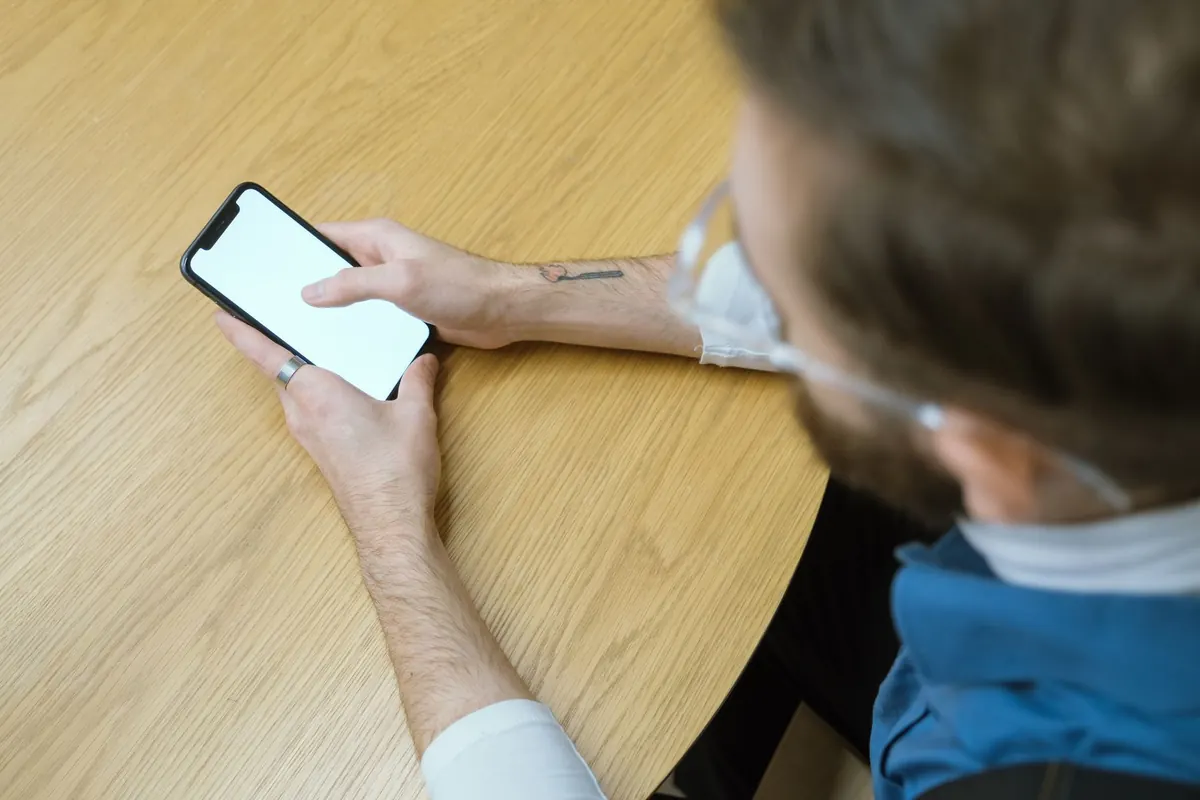
A clip lands in the family group chat a little before midnight. It is nine seconds long, shaky, and shows something alarming. By breakfast, three people you know have shared it, and one has added a caption that was not in the original. Nobody in the thread can say where it was filmed, or when.
That is the moment this checklist is for. Whether you are a reader deciding what to forward or a reporter deciding what to publish, the questions are much the same, and most of them take under a minute. The aim is not to turn you into a professional fact-checker. It is to stop you being a dependable relay for things nobody has checked.
Start with the artifact, not the story
Most viral claims arrive as fragments: a screenshot of a post, a quote card with a flag in the background, a clip with a caption typed over the top. Before you argue about whether the claim is true, establish what the object in front of you actually is.
A screenshot is a picture of text, and pictures of text are the easiest thing in the world to edit. If someone sends you a screenshot of a post, go and find the post. Search the exact wording, open the account's timeline, see whether the post still exists. A deleted post proves nothing on its own — people delete posts for a dozen dull reasons — but it does mean the screenshot is now your only evidence, and one screenshot is thin evidence for anything.
Trace the image or clip to its earliest appearance
This is the single most useful habit in verification, and it catches more false claims than any other step.
For still images
Run a reverse image search through Google Lens, TinEye or Bing. Crop first: strip out the caption bar, the channel logo, the arrow someone drew in red. Then look at the oldest match, not the most popular one. If the earliest version of a photo sits on a tourism site from four years ago, you are finished — the claim is dead. Watch for the same frame reappearing with different captions; that pattern is usually the whole story.
For video and clips
Take two or three frames from different moments and search each one as a still. Then watch the whole clip, all the way through, not just the excerpt someone selected for you. Look for details nobody meant to highlight: shopfronts, number plates, street signs, a language, a season, weather that does not match the season claimed.
Treat the audio as the least trustworthy part of any video. A scream, an explosion or a siren can be lifted from an entirely unrelated event and laid over footage of something else. Mute it and look again.
Read the account, not just the post
Ask who posted first, and then look at who they are. An account created three weeks ago that has never once mentioned the town it now claims to be reporting from is telling you something. So is an account whose entire history is reposting other people's videos with dramatic captions.
A verification badge is not a verification of accuracy; on most platforms it indicates a paid subscription or a notable account, not editorial review. If the post claims to be from a named journalist or a local outlet, find that person or that outlet independently and check whether the post appears on their actual feed. Impersonation is common precisely because it works.
Count sources, not posts
Twenty posts that all trace back to the same account are one source with better distribution.
Amplification creates the illusion that a claim is widely corroborated. It rarely is. Ask a blunt question: who saw this with their own eyes? A single bystander can be a legitimate source. A hundred accounts quoting that bystander are not a hundred sources.
When two outlets report the same thing, check whether they are genuinely independent — whether they had their own reporter, their own witnesses, their own access — or whether both are rewriting the same wire copy. Official accounts are valuable and you should check them, but early official statements are often incomplete and sometimes revised within hours. On anything touching health, money or a legal case, wait for a second substantive confirmation and, where it matters to your own decisions, take professional advice rather than acting on a viral post.
Pin down the time and the place
Old footage resurfacing during a new event is the most common failure in breaking news, and it is also the easiest to catch. Ask what the weather was doing that day. Ask whether the trees are in leaf. Look at the angle of shadows. Then compare what you see with a map: satellite imagery, street view, a building layout.
If a clip is supposedly filmed two streets from where you grew up, look at the street. Local knowledge is a verification tool, and it is one that reporters working a story in another country often lack — which is exactly why they lean on people who live there.
Check whether the claim outruns its evidence
Read the headline, then read the clip, then read the headline again. Does the footage actually show what the caption says it shows? Does the post quote someone directly, and can you find those words in the original interview or statement? Vague attribution — "reports suggest", "sources say", "people are saying" — is where exaggeration hides.
It also helps to ask what would have to be true for the claim to hold. If the answer requires several unlikely things to line up at once, you need much stronger evidence than a nine-second clip with no location.
The eight-step checklist
- Identify the artifact. Screenshot, clip, quote card, or original post? Find the original before anything else.
- Run it backwards. Reverse-search images and key video frames to find the earliest appearance.
- Watch the full clip. Mute the audio and look at what is actually on screen.
- Check the source's history. Account age, posting record, and whether they are who they claim to be.
- Separate sources from echoes. Count independent, first-hand accounts, not shares.
- Fix time and place. Weather, seasons, shadows, signage, maps.
- Test the claim against the evidence. Does the material support the sentence above it?
- Label what you know. If you share, say plainly what is confirmed and what is not.
If you shared something that turned out to be wrong
Correct it in the same place, with the same reach, and without a paragraph of excuses. A short line — what you shared, what was wrong with it, what the correct information is — does more good than quietly deleting the post. Deleting alone leaves everyone who saw the original with the wrong version and no correction.
And keep a little patience in reserve. Breaking news is messy by nature; the first reports of most events are partly wrong even when everyone involved is acting in good faith. Waiting twenty minutes is rarely expensive. Sharing something false, in a group chat or on a front page, takes far longer to undo.
Photo: VAZHNIK / Pexels